
Inside Swindon's Health Hydro: A Victorian Gem Fighting for Its Future
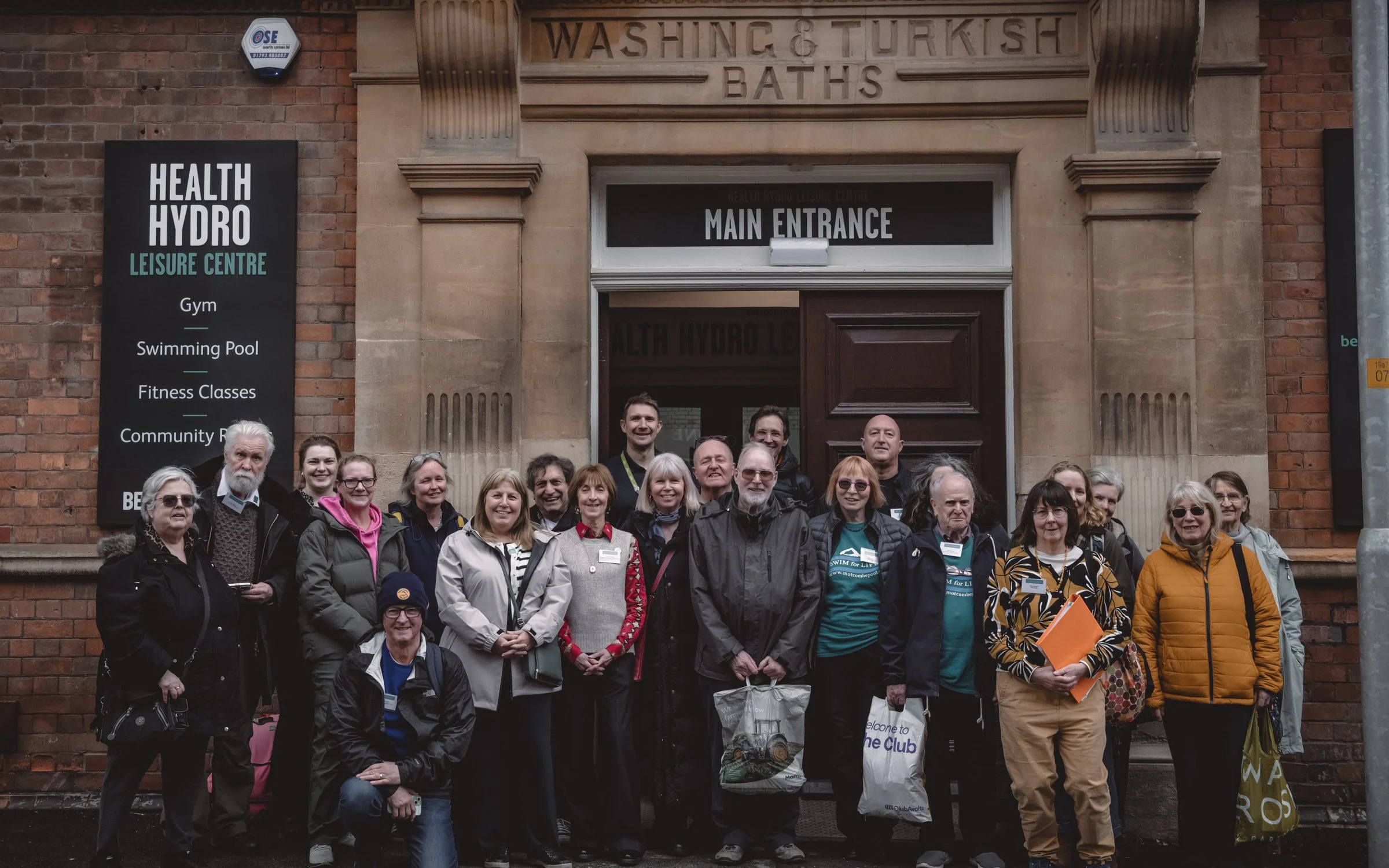
Members of Historic Pools of Britain gathered outside the Victorian entrance to Swindon Health Hydro
There are buildings that stop you in your tracks. Not because they're grand or immaculate, but because they carry the weight of something real lives lived, history made, stories embedded in every brick and tile. Swindon's Health Hydro is one of those buildings.
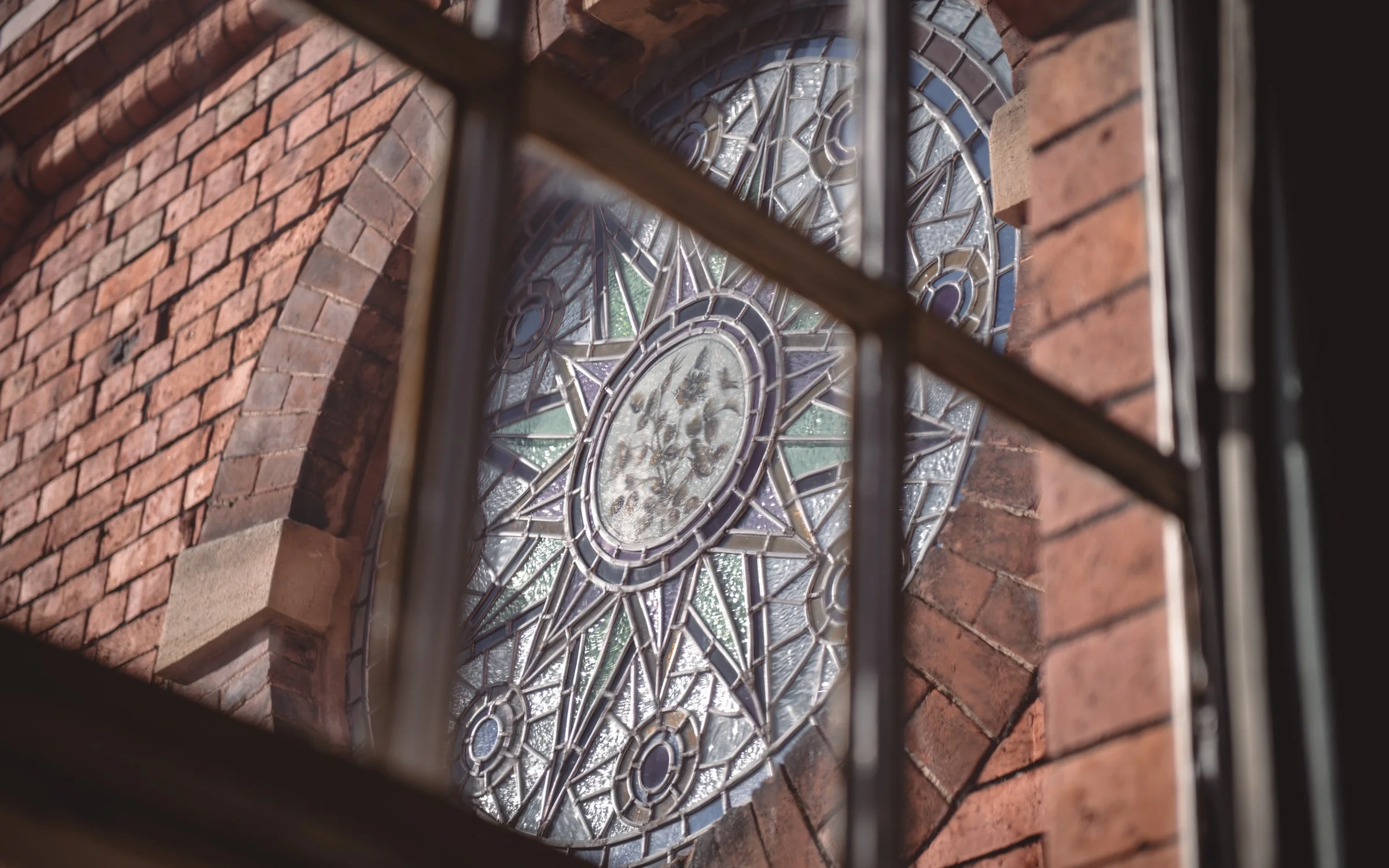
Original Victorian stained glass
On 27th February I joined Historic Pools of Britain for a special visit to the Health Hydro, exploring the remarkable story of one of England's most extraordinary and most overlooked Victorian swimming pools. What I found was a building that has survived two world wars, the collapse of the railway industry that built it, and decades of neglect. And against considerable odds, it is still very much alive.
Built by Railway Workers, for Railway Workers
To understand the Health Hydro, you have to understand the world that created it.
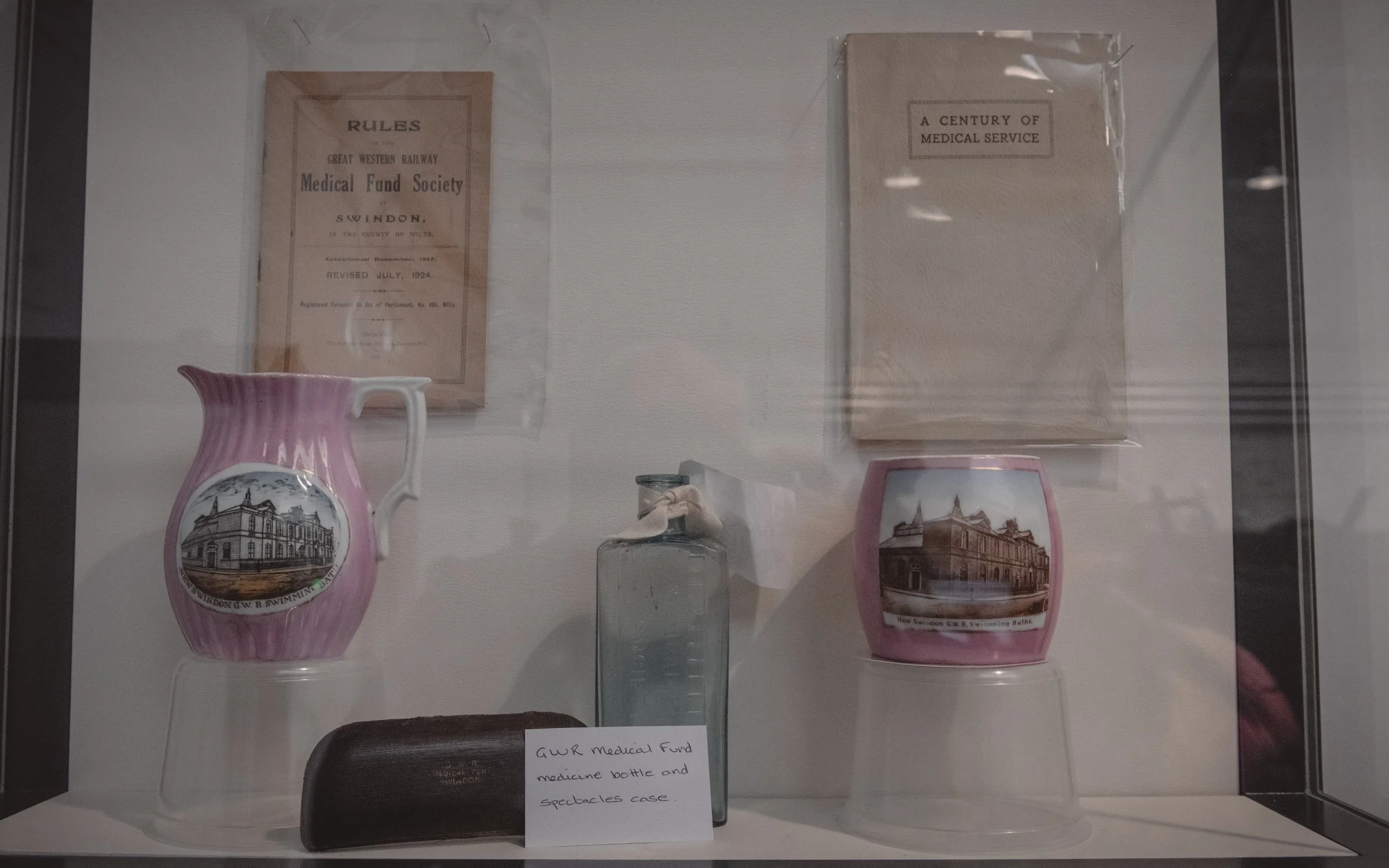
When the Great Western Railway established its locomotive works in Swindon in 1843, it didn't just build a factory it built an entire town. Workers flooded in from across the country, and the GWR found itself responsible for housing, educating, and keeping healthy a rapidly growing community. Out of this came the GWR Medical Fund Society, founded in 1847, which provided healthcare funded by compulsory subscriptions deducted directly from workers' wages. It was, in its time, a revolutionary idea a complete, worker funded health service operating decades before the NHS.
The Health Hydro then known as the Swimming Baths and Dispensary opened in 1891 and 1892 as the Medical Fund Society's most ambitious project. Designed in the Queen Anne style by local architect JJ Smith, it grew over the following decades to include washing baths, two swimming pools, Turkish and Russian baths, a dispensary, dental surgery, ophthalmology, physiotherapy, and more. Water for the pools was pumped three quarters of a mile from the Works through a tunnel beneath Faringdon Road — a tunnel large enough to walk through.
Famously, Aneurin Bevan the architect of the National Health Service reportedly looked at what Swindon had built and said: "There was a complete health service in Swindon. All we had to do was expand it to the country."
The Health Hydro is, in a very real sense, one of the birthplaces of the NHS.
Walking Through the Door
Standing outside on a February morning, you can still read the words carved into the stone above the original entrance: WASHING & TURKISH BATHS. Below it, the modern Health Hydro sign lists gym, swimming pool, fitness classes, community rooms. The old and new sit side by side, slightly awkwardly, like two different eras caught in the same photograph.
Which, as it happens, is exactly what I was there to capture.
Before you even reach the pool hall, the building reveals itself slowly. A long, narrow corridor leads you deeper inside original green and terracotta dado tiles lining both walls, the ceiling arching above you, a figure disappearing into the distance ahead. It feels like stepping into another century. You almost expect to hear the echo of voices speaking a different kind of English.
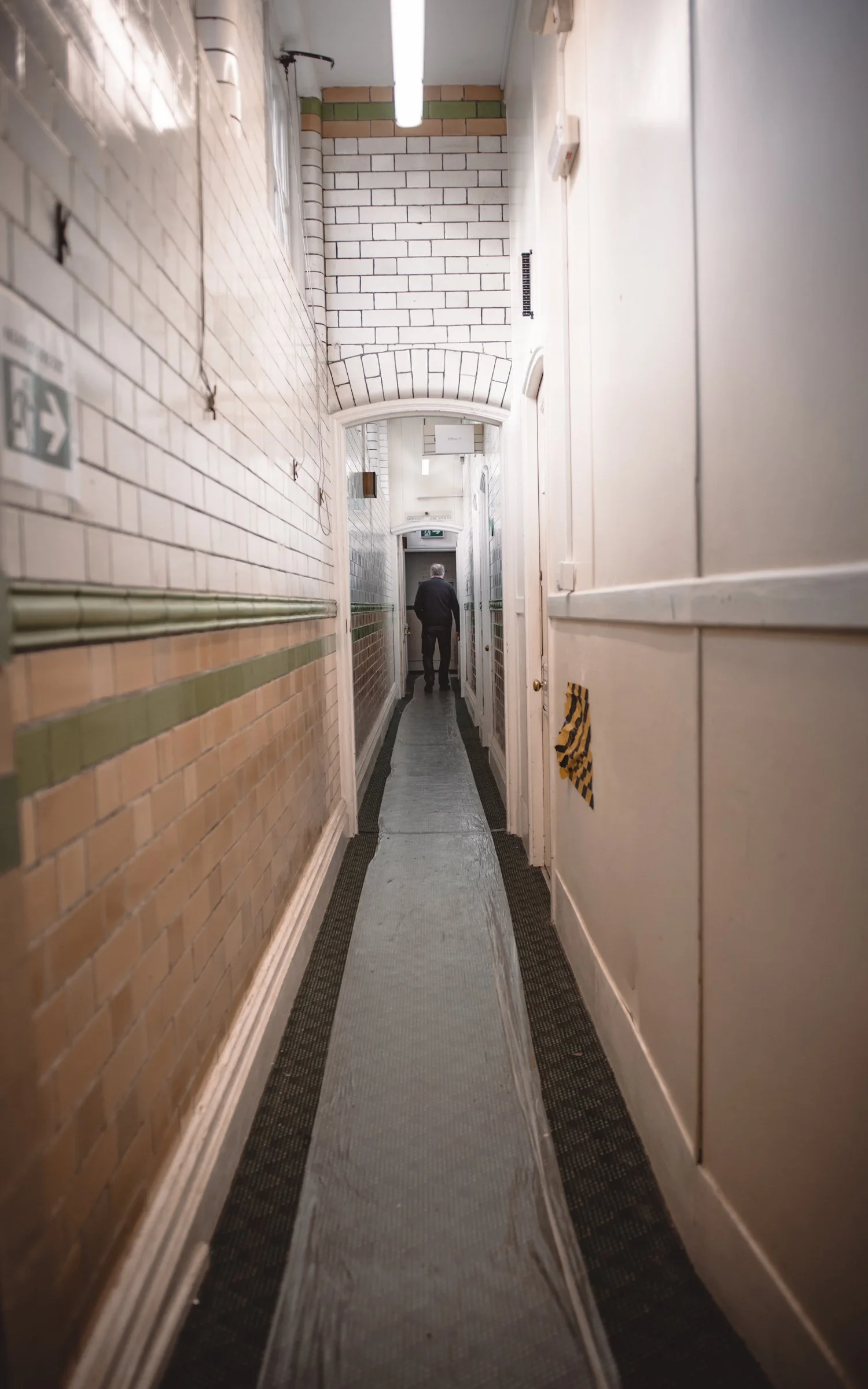
The original tiled corridor leading deeper into the Health Hydro
Then there are the windows.
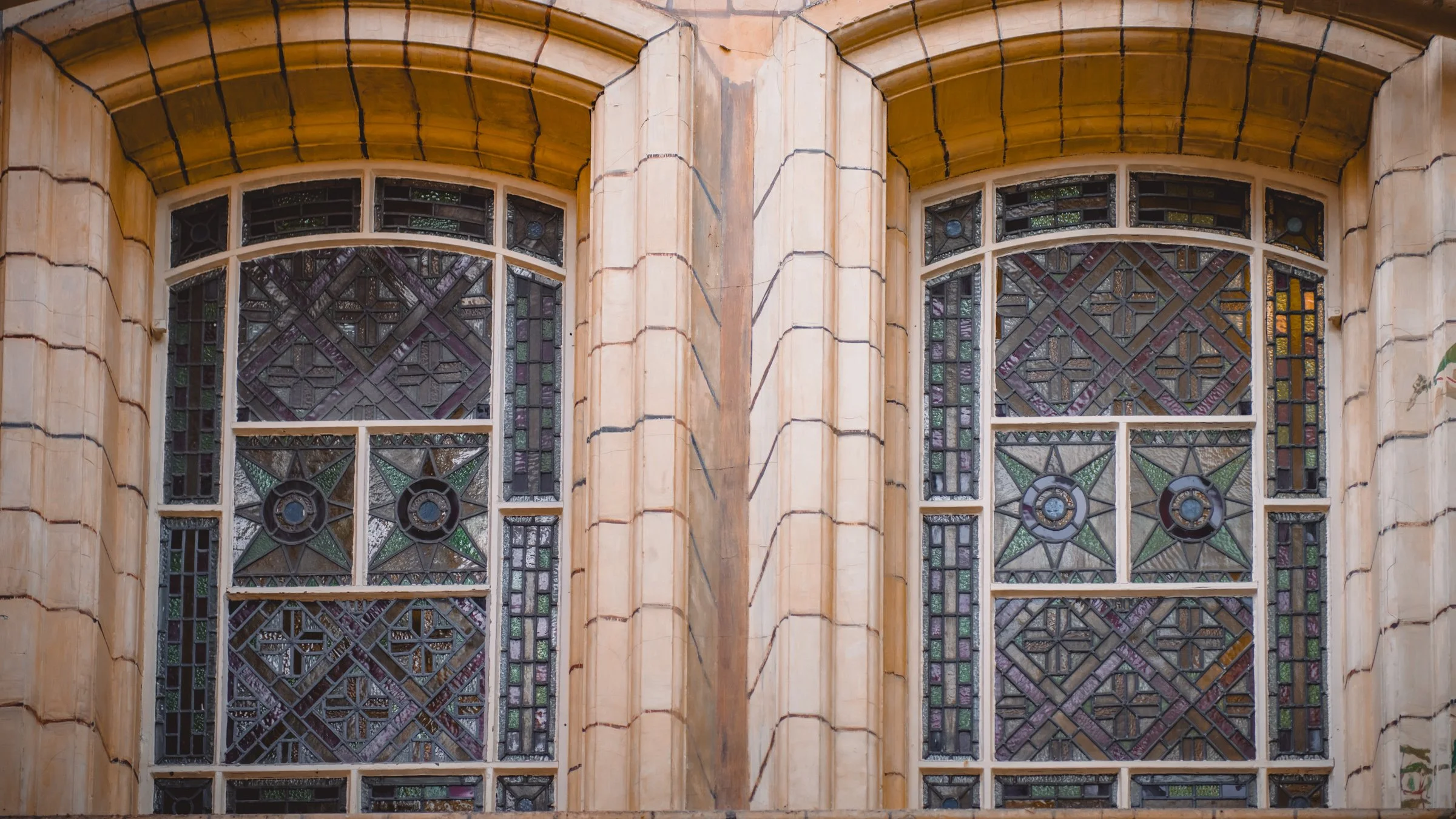
Pausing in one of the entrance rooms, I noticed a circular stained glass window set into the Victorian brickwork a botanical design, delicate and precise, the light filtering through in soft greens and blues. What makes it extraordinary is the knowledge that it was almost certainly made here, in Swindon, by the same GWR craftsmen who worked at the locomotive works just down the road. The bricks, the stained glass, the metalwork, the joinery — almost everything in this building was produced by the community it was built to serve. That's not just architectural history. That's an act of collective pride.
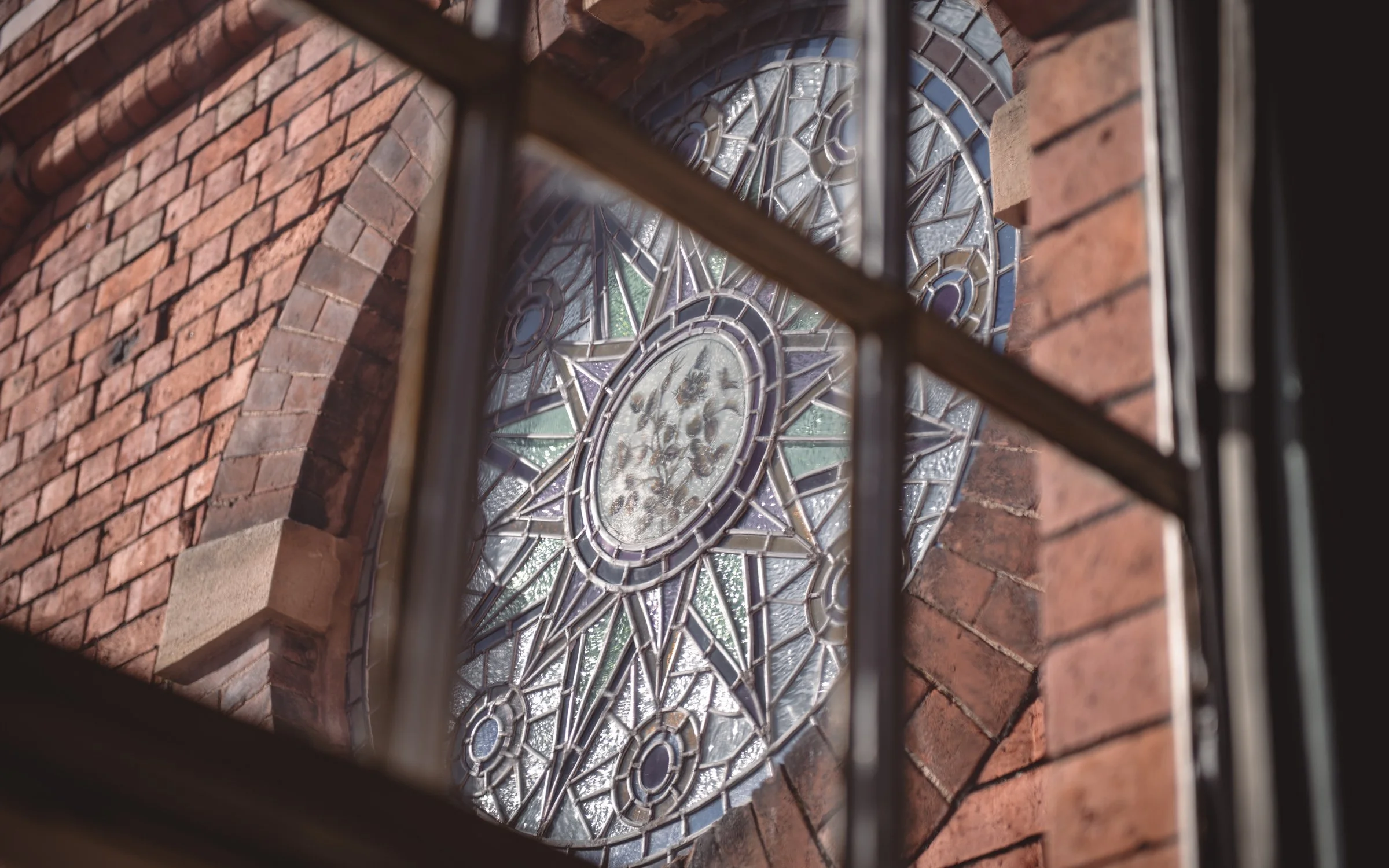
Original Victorian stained glass in the entrance hall
Before you reach the pool hall itself, the building offers one more quiet moment. Looking straight up through the rooflight above the corridor, the Victorian timber ceiling frames a rectangle of deep blue sky white painted boards converging on a pane of glass, the outside world held at a distance. It's a detail most visitors walk straight past. As a photographer, you stop.
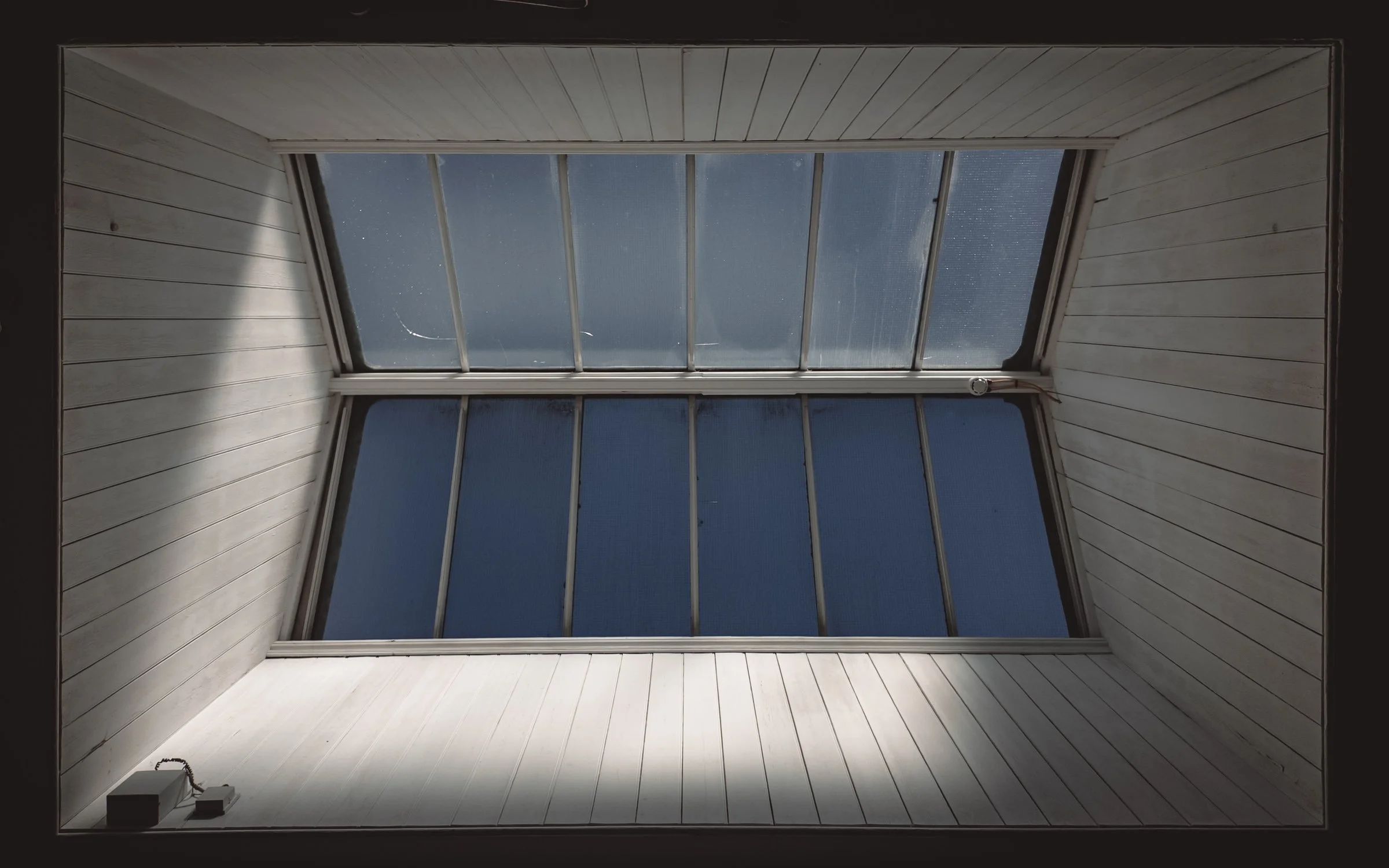
Looking up through the Victorian timber ceiling toward the rooflight
Then you turn the corner.
The Pool Hall
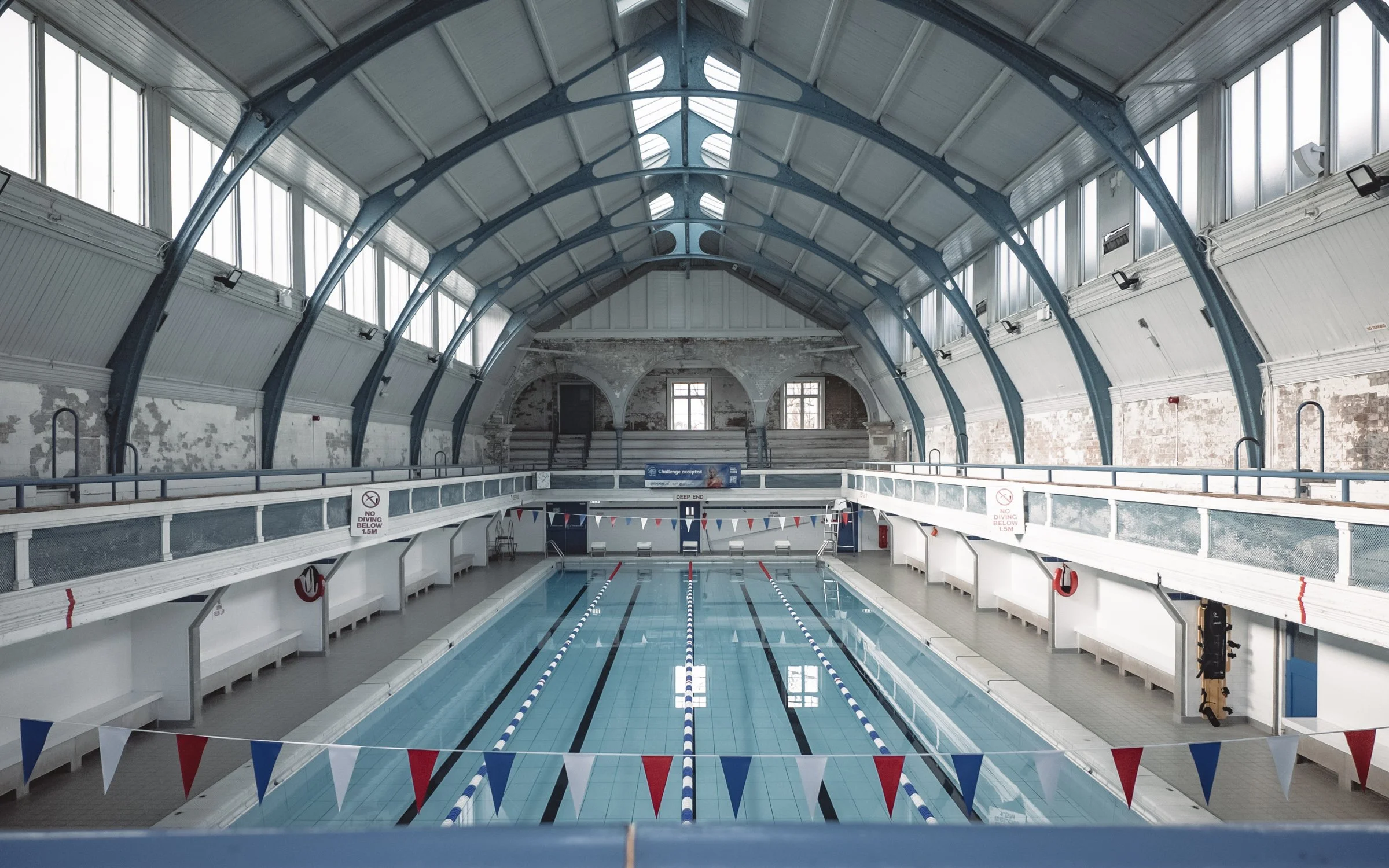
The main pool hall
Nothing quite prepares you for the pool hall.
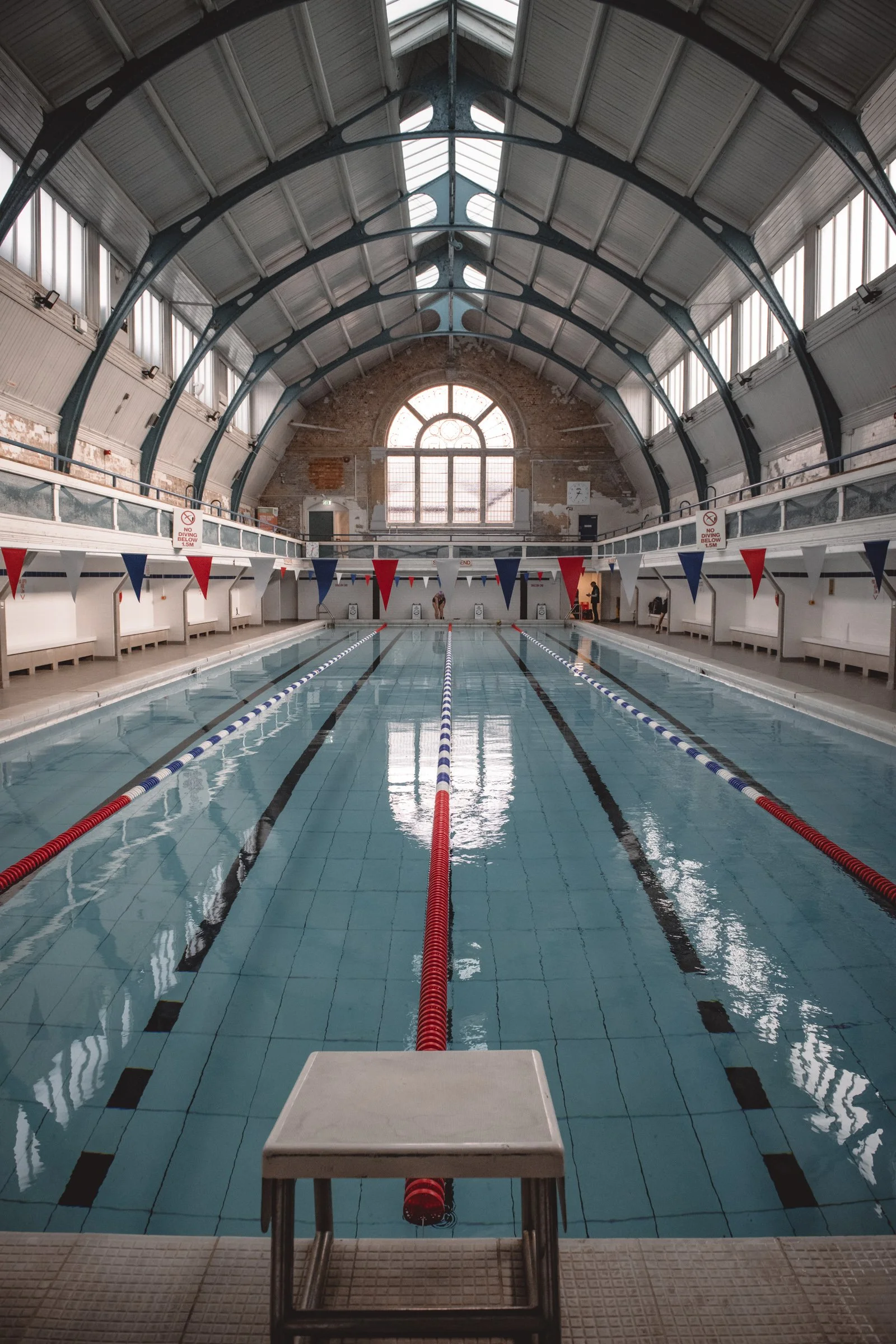
Standing at the shallow end and looking the full length of the pool, the view stops you completely. The barrel-vaulted roof soars overhead in perfect symmetry, the blue-green ironwork of its trusses manufactured at the GWR Works just down the road drawing your eye toward the far end. A lone lifeguard sits quietly on the left, reading. The red lane rope runs straight down the centre of the pool like a spine. The "SHALLOW END" signs frame both sides of the image, a reminder that this magnificent Victorian space is still, quietly and stubbornly, just a swimming pool.
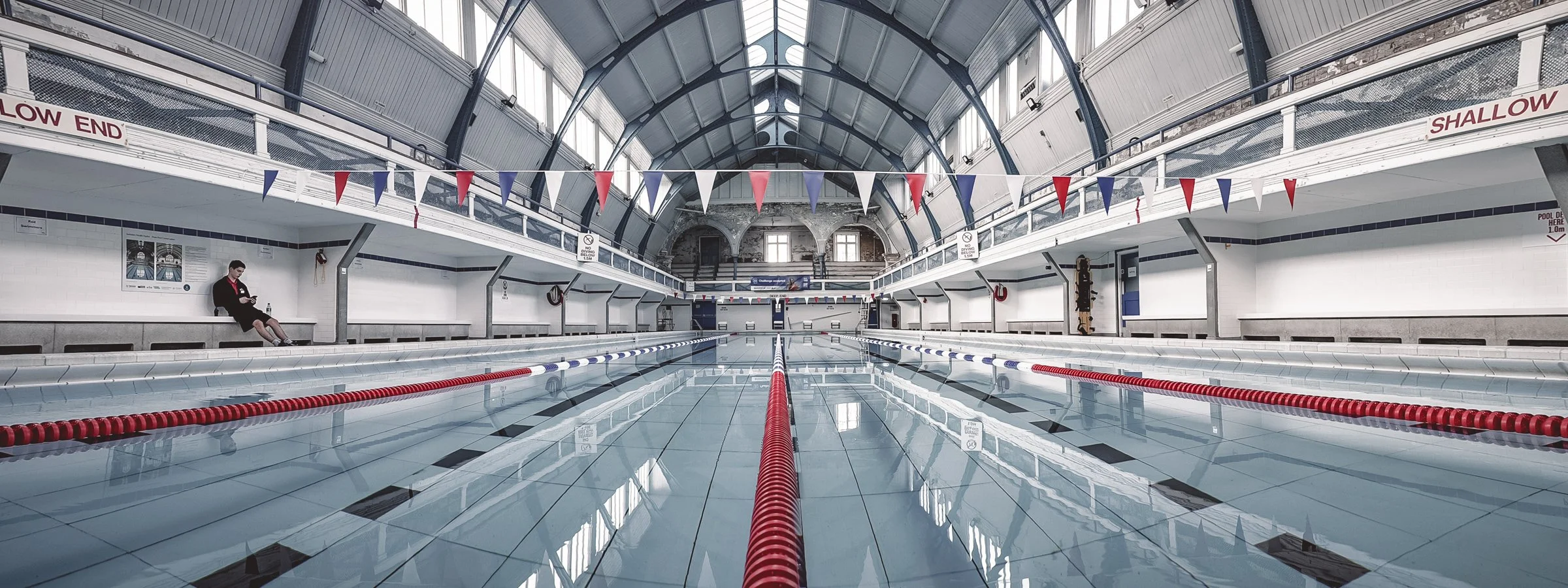
The main pool hall from the shallow end
Above the gallery on the far wall, plaster has fallen in great patches, exposing the raw Victorian brickwork beneath. It's not decay so much as archaeology the building revealing its own layers. The restoration has cleaned and renewed much of the pool level. Everything above it is still waiting its turn.
The red, white and blue bunting loops across the space. A lifeguard sits reading on the left. Grandeur and the ordinary, inseparable.
Move to the side of the pool and the mood shifts entirely. The angle becomes asymmetric, the light darker and more atmospheric. A lone swimmer cuts through the water in the foreground, steady and unhurried. Above them, the exposed heritage walls plaster long gone, raw Victorian brick and render in its place glow in the winter light. The "DEEP END" sign hangs on the far wall. The building is not a museum. People swim here, every day, under this extraordinary roof. That fact, somehow, is the most remarkable thing of all.
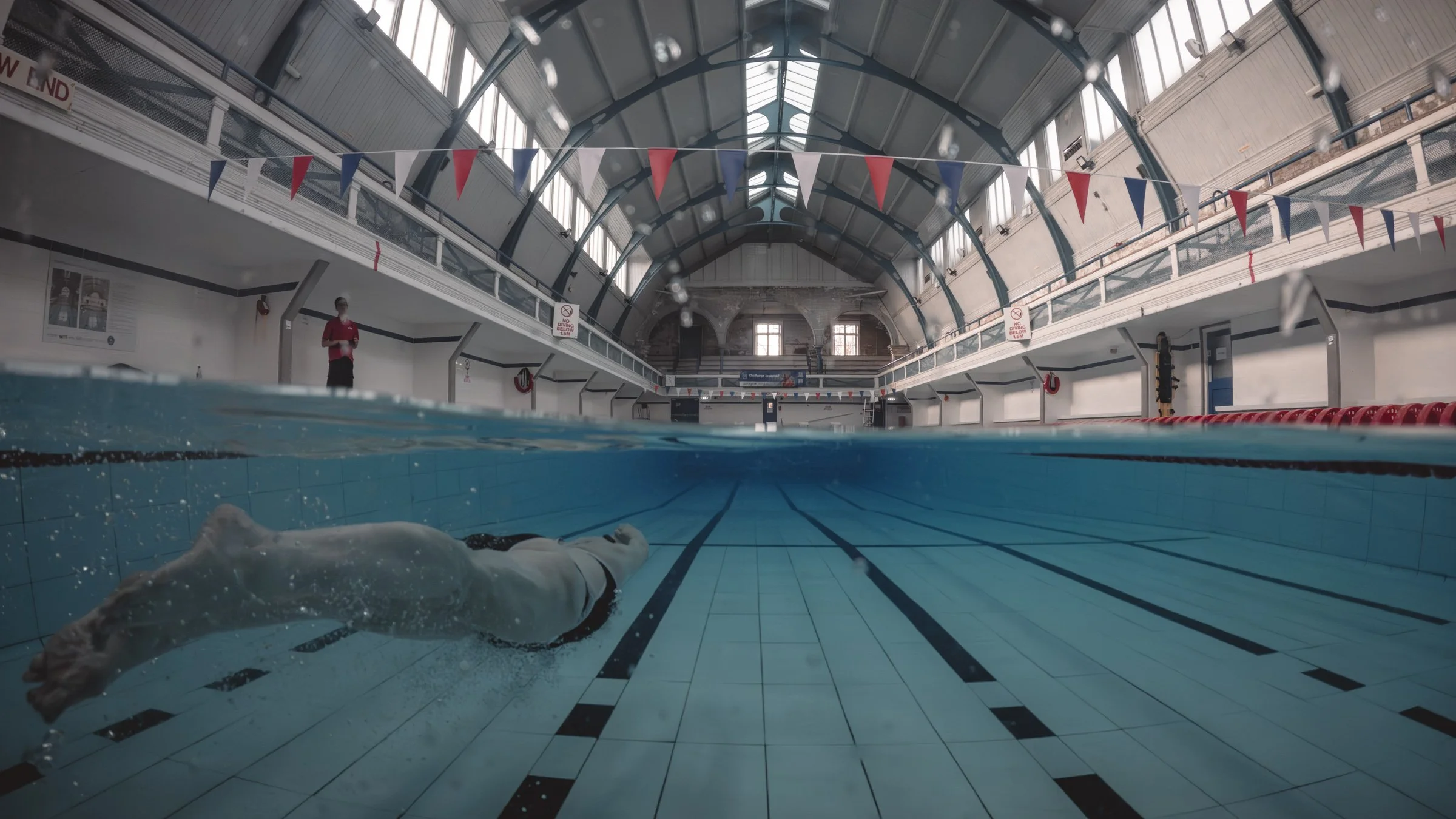
A lone swimmer cuts through the water beneath the Health Hydro's unrestored heritage walls
The Details That Stop You
The pool hall is spectacular, but it's the quieter moments that stay with you longest.
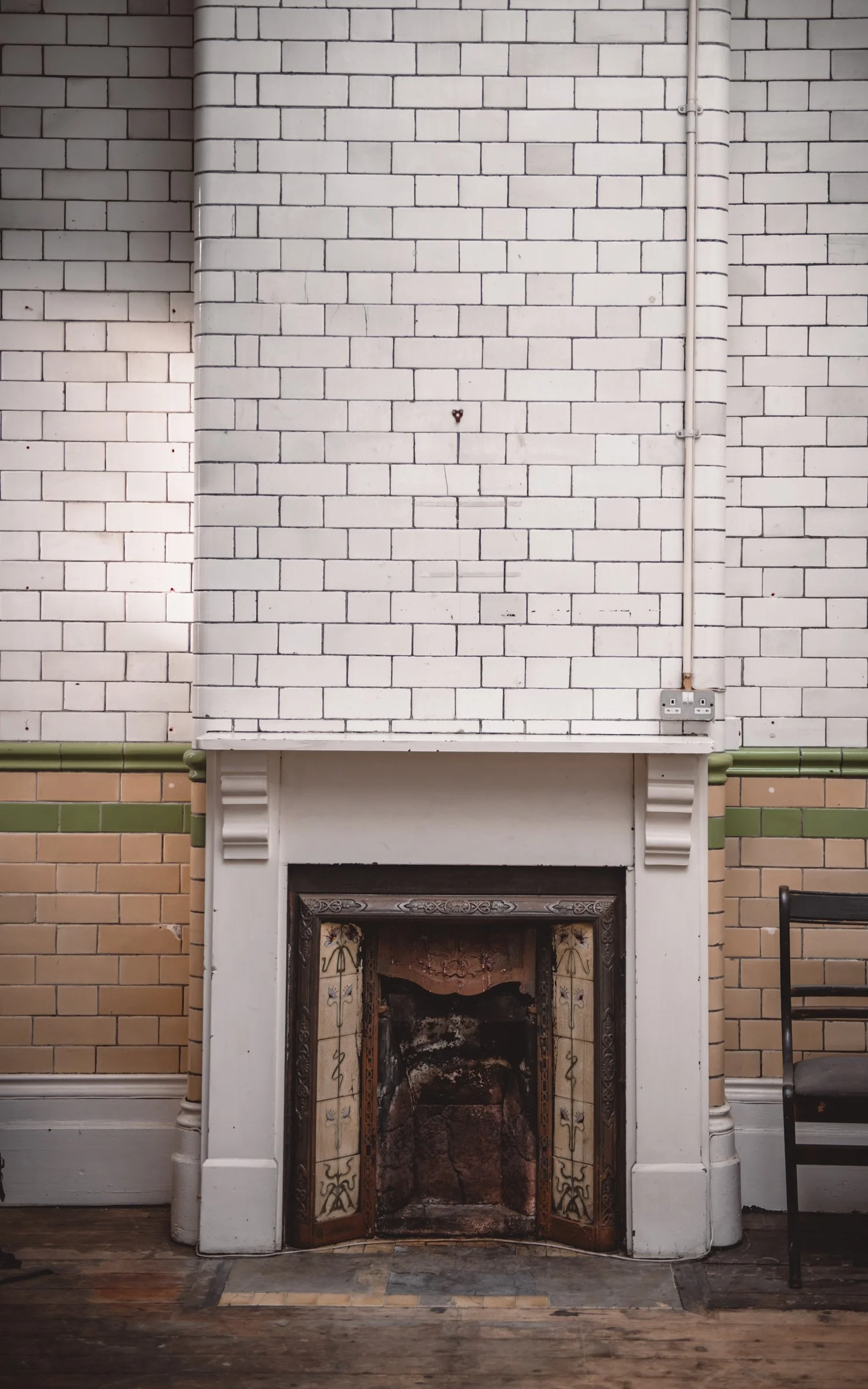
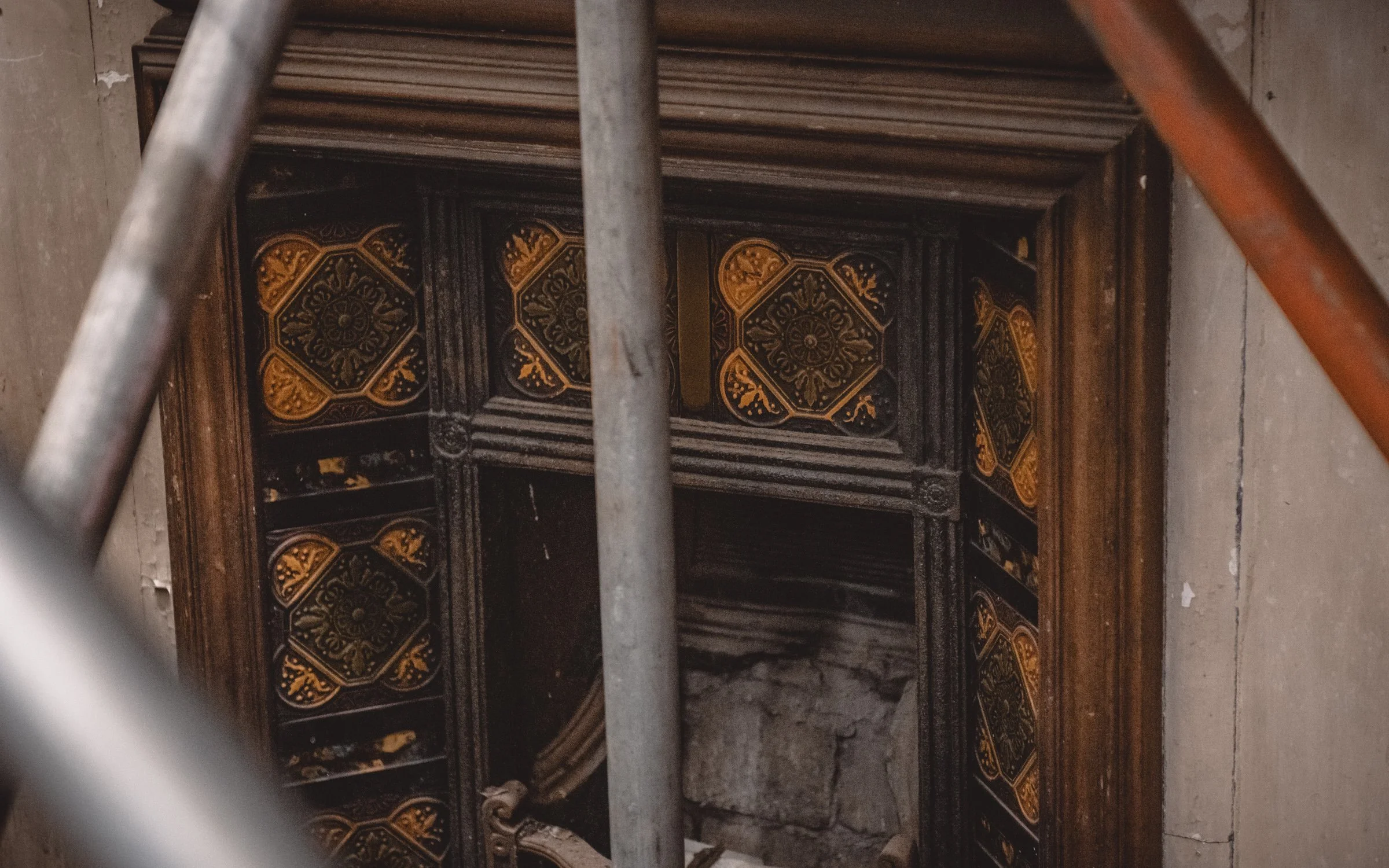
Original Art Nouveau cast iron fireplace insert with hand-painted decorative tiles
In one of the side rooms off the main corridor, an original Victorian fireplace survives entirely intact. Not just the white painted surround the Art Nouveau cast iron insert, with its hand-painted decorative tiles, is perfectly preserved. Delicate flower stems, butterfly motifs, the kind of craftsmanship that was routine in 1891 and is virtually impossible to replicate today. The firebox behind it is crumbling, scorched, cracked clearly untouched for decades. But the tiles are pristine, the painted details still vivid.
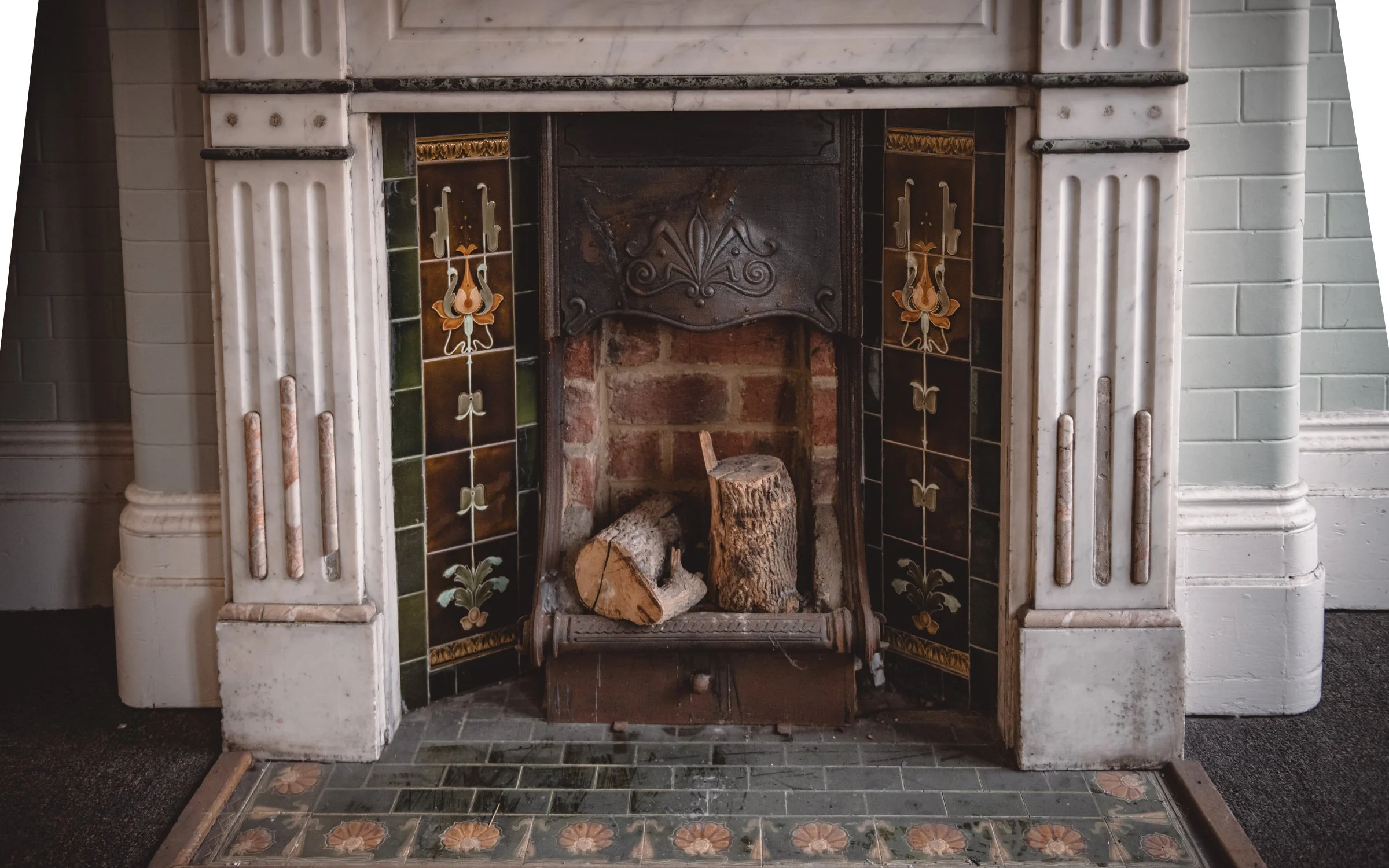
It is the single image from this visit that most completely captures what the Health Hydro is. Exquisite craft and urgent decay, side by side, waiting for someone to care enough to save them.

Period swimwear on display
Elsewhere, four mannequins stand in a corridor dressed in period swimwear wool costumes from another era entirely, a reminder of how completely our relationship with swimming and the body has changed over 130 years. The shot almost took itself.
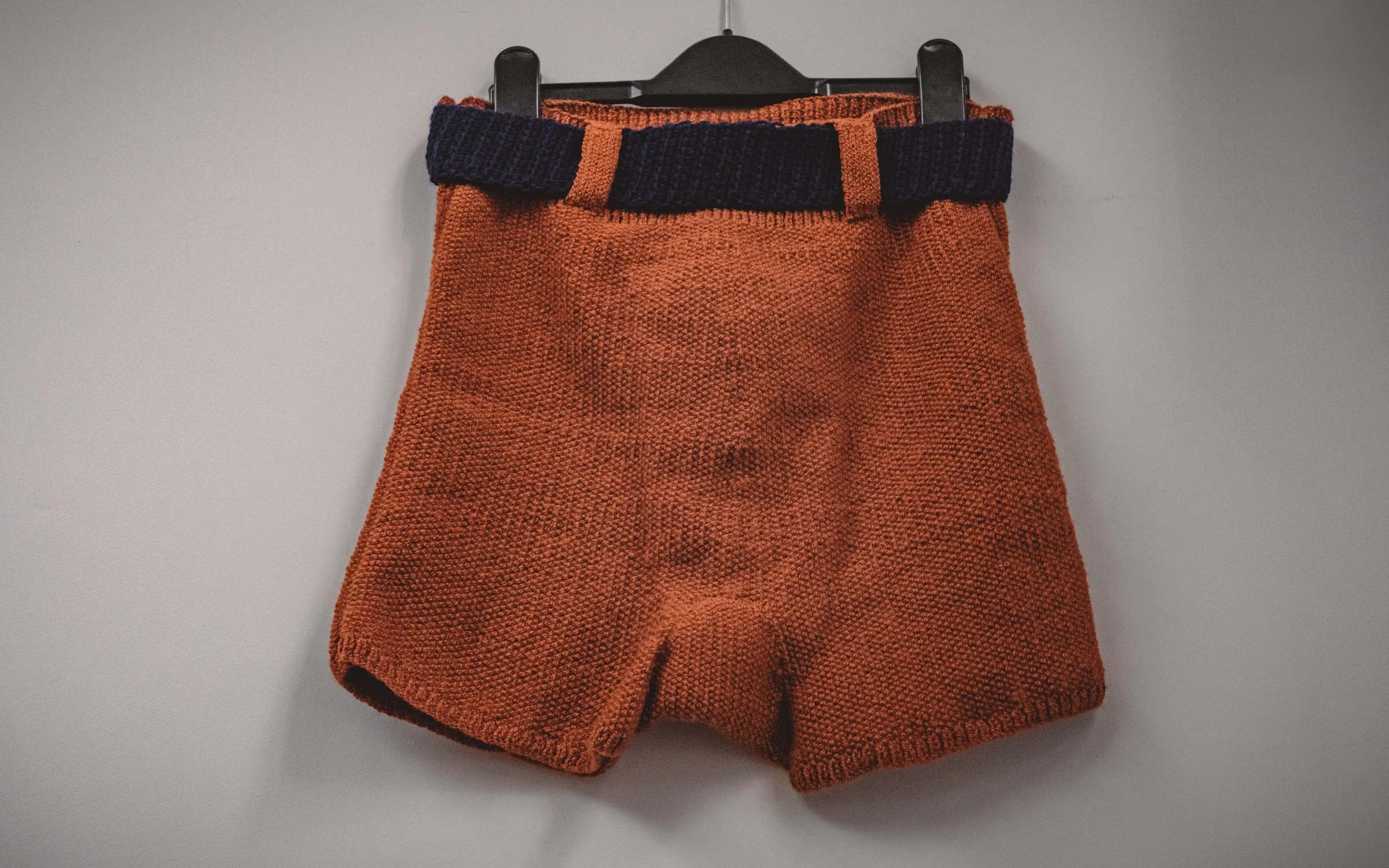
These are the images that tell the real story of a place. Anyone can photograph a grand facade. It's the fireplace, the worn floor tile, the painted sign that hasn't been touched in forty years those are the images that make a building breathe.
Two Buildings in One
The Health Hydro has always been more than a swimming pool, and a visit makes that clear quickly.
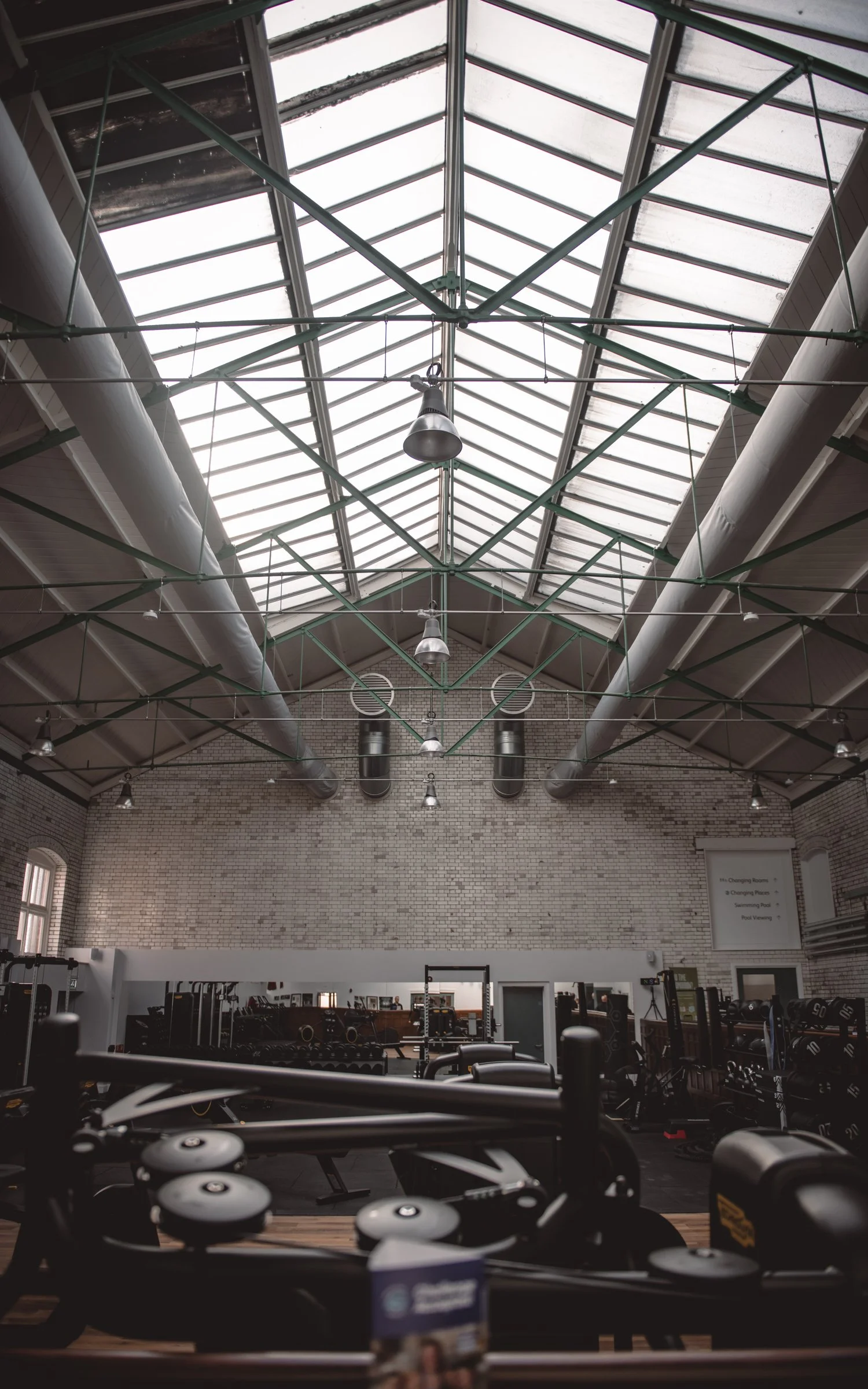
The Health Hydro's gym — modern fitness equipment beneath a Victorian glass and iron roof.
Step into the gym and the collision of eras stops you in your tracks. Modern equipment weights racks, cardio machines, the paraphernalia of a contemporary fitness space sits beneath a Victorian glass and iron roof that wouldn't look out of place in a railway terminus. Green steel trusses cross overhead. Roof lights flood the space with cool natural light. The building was designed for exactly this the health and fitness of working people and 130 years later it is still doing precisely that, with new tools. There's something quietly moving about it.
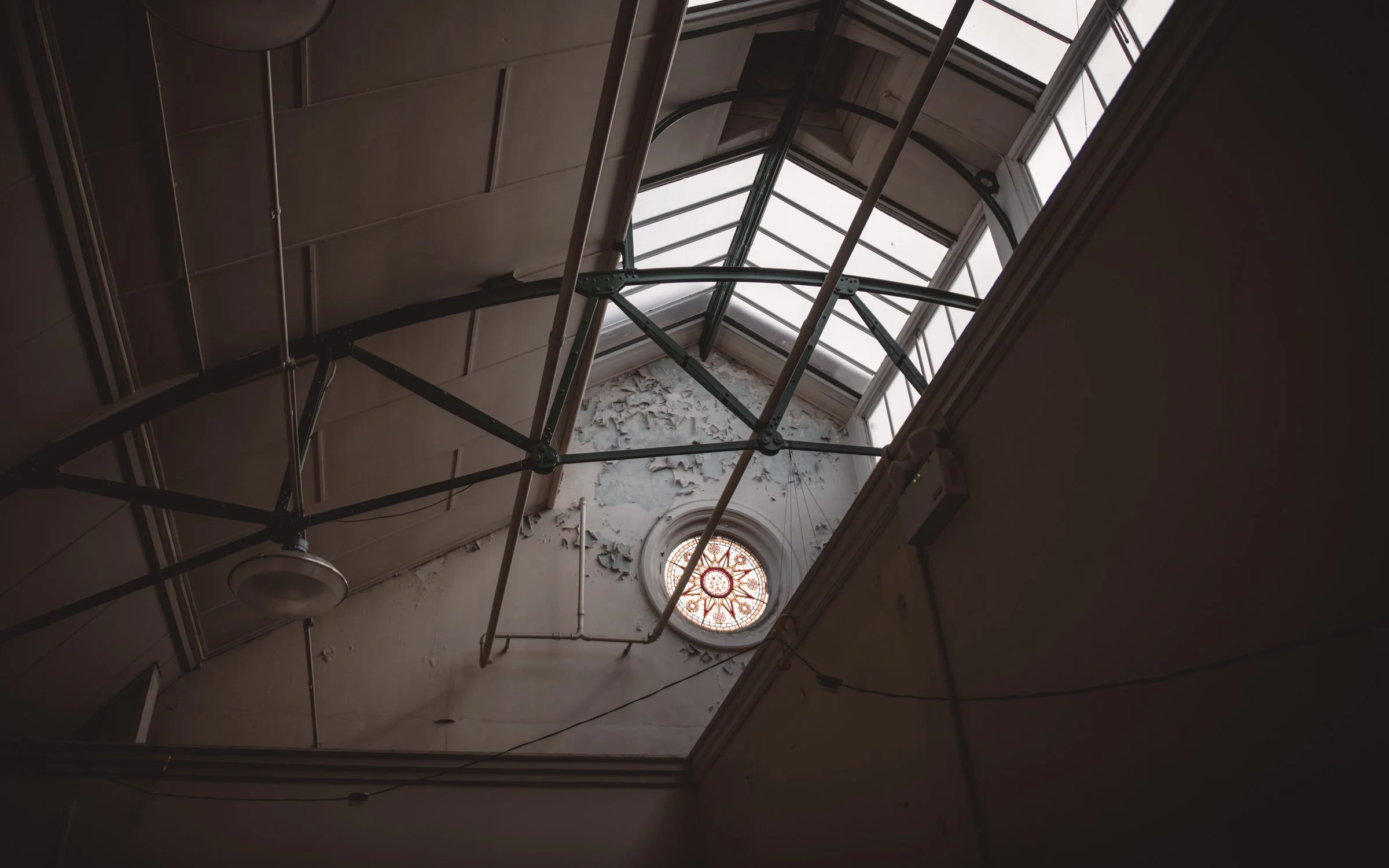
There is so much more to be done, this single image from this visit that most plainly states what is at stake. That roundel has survived 130 years. It would not survive another decade of neglect.
A Community That Refuses to Give Up
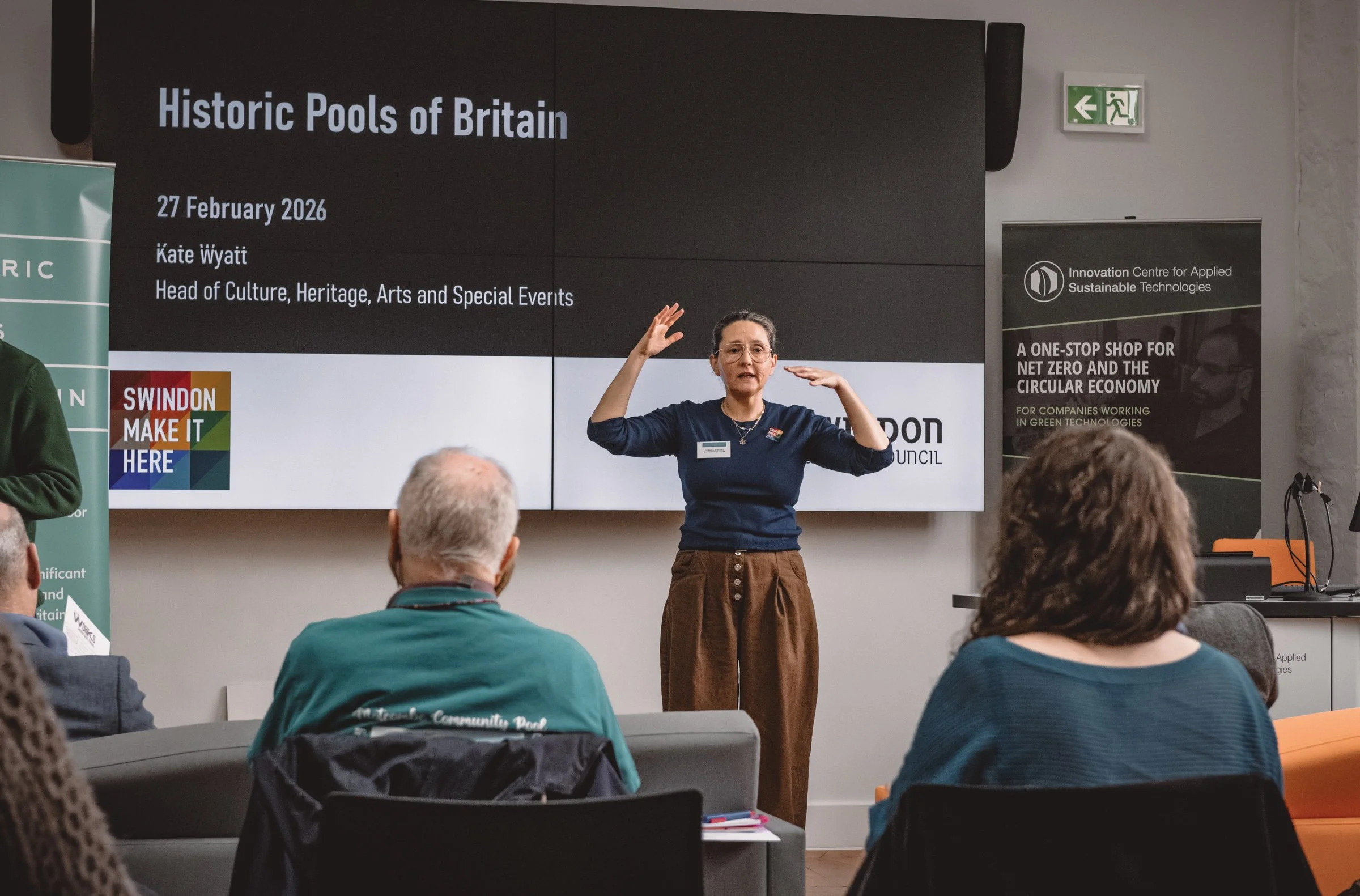
What struck me most about the day wasn't the architecture. It was the people.
The Friends of Swindon Health Hydro, the staff, the Historic Pools of Britain members who had travelled from across the country all of them animated by the same quiet determination. This building matters. It has mattered for 130 years. It should matter for 130 more.
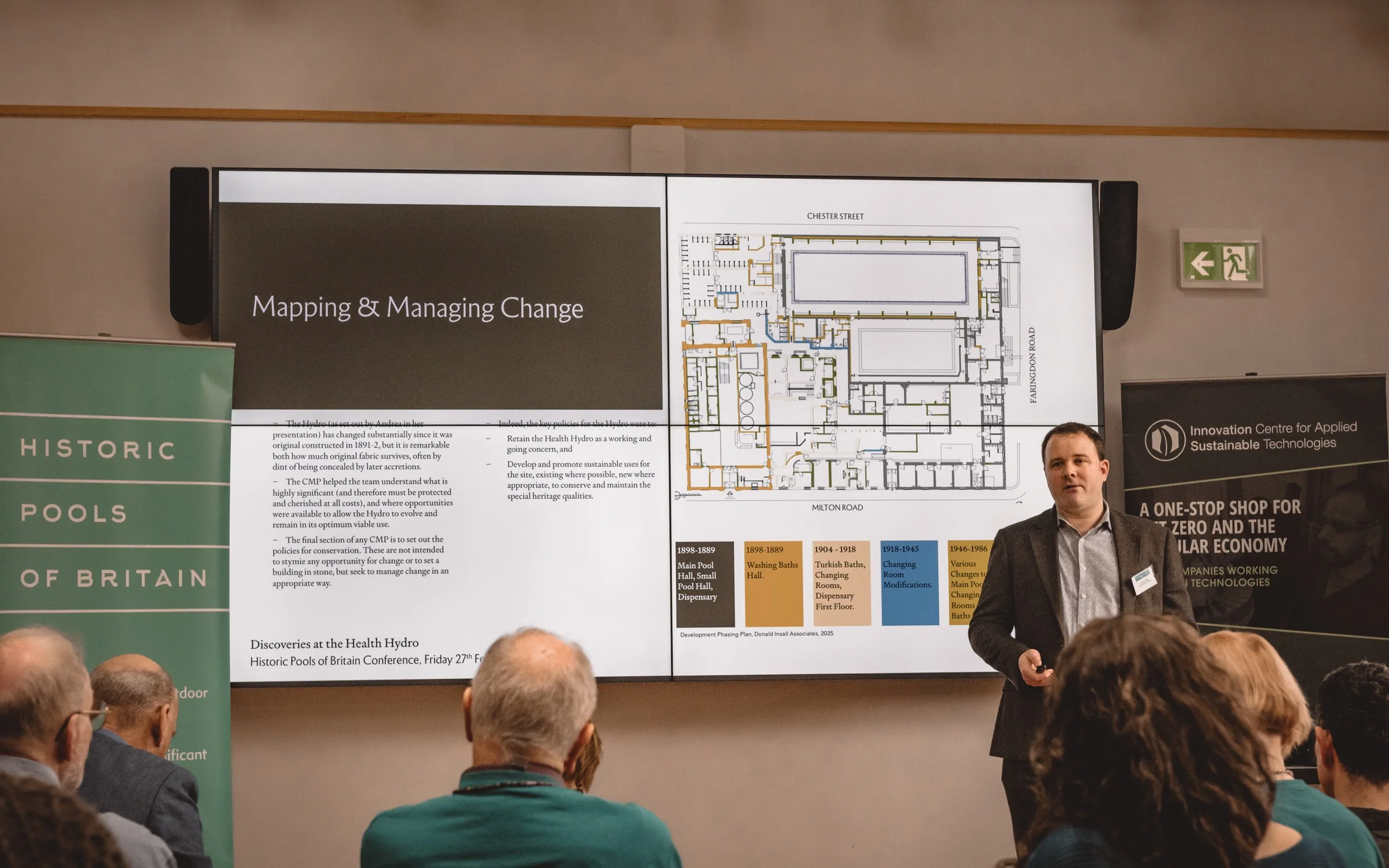
The restoration is ongoing. Funding remains a challenge. The full vision for the building restoring it to something approaching its original scale and purpose will take years and significant investment to achieve. But the fact that the pool is open and swimming again, that the Turkish baths are considered the oldest continuously functioning in England, that a community of passionate people is gathered around this building all of that feels like grounds for cautious optimism.
On Photographing Historic Spaces
Places like the Health Hydro are exactly why I do what I do.
Documentary and heritage photography isn't just about creating beautiful images though that matters enormously. It's about preserving a visual record of places at a particular moment in time, telling stories that might otherwise go untold, and giving organisations the kind of imagery that helps them make the case for why their work matters.
The Health Hydro deserves to be seen. The other 27 member pools of Historic Pools of Britain deserve to be seen. These buildings are irreplaceable pieces of social and architectural history, and most of them are being documented with photography that simply doesn't do them justice.
If you're involved with a heritage pool, a lido, or a historic bathing place and you'd like to talk about how documentary photography might help tell your story, I'd love to hear from you.
I photograph pools, lidos and open water across the UK,
for events, funding bids and press. If you've got
something in mind, get in touch.
Roger Taylor is an adventure and outdoor photographer based in the UK, published in The Guardian, The Times, BBC Wildlife, and Outdoor Swimmer magazine. He is available for heritage, documentary, and commercial commissions.
Contact Roger https://www.rogertaylorphotography.co.uk/contact View portfolio https://www.rogertaylorphotography.co.uk/adventure-photography